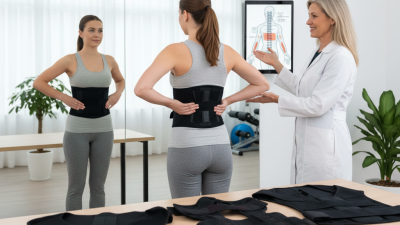
Patients: Please fill out the Form and Nexia will inform you whether your insurance will cover all or part of your brace.
Physician's Offices: Please call 888.670.3380 for special Wholesale Pricing for all braces.

China Best Rehabilitation Equipment Manufacturers

Choosing reliable Rehabilitation equipment requires more than comparing prices or counting product categories. Chinese manufacturers now supply mobility aids, therapy tables, exercise systems, and digital rehabilitation devices worldwide. Their capabilities vary widely, however. A professional evaluation should examine design quality, production experience, clinical feedback, and service support.

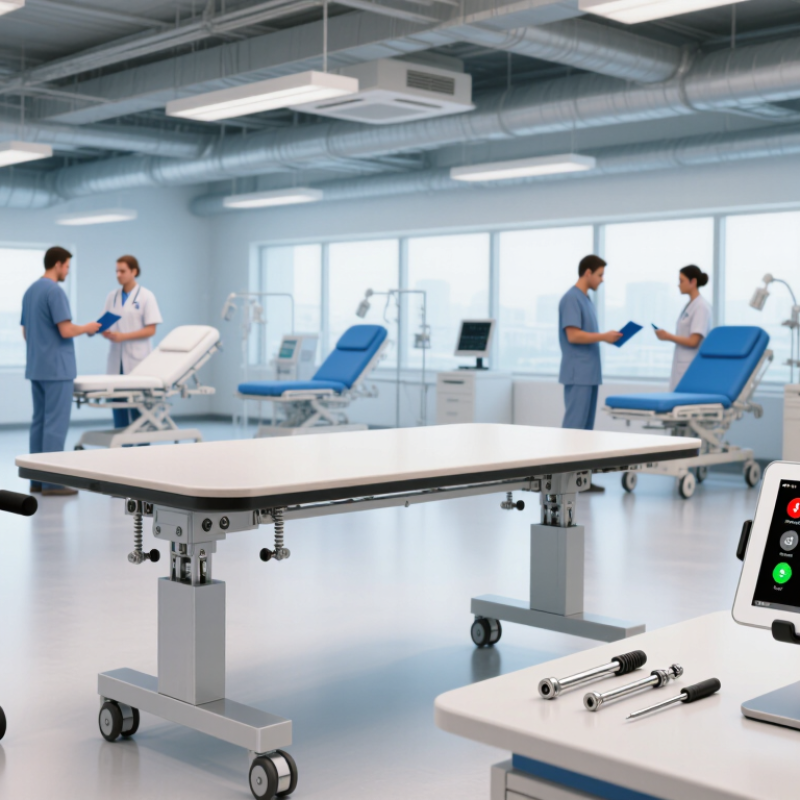
Look closely at the details. A stable therapy table should adjust smoothly and lock securely. A walking trainer should offer clear height markings and dependable hand supports. Electrical devices need readable controls, documented safety testing, and practical maintenance instructions. These details influence therapists, caregivers, and patients every day.

Many established manufacturers work with hospitals, rehabilitation centers, universities, and distributors. This cooperation can improve product design and reveal problems that laboratory testing may miss. Ask for certifications, quality-control records, warranty terms, spare-parts availability, and user training. Reliable suppliers explain limitations instead of promising perfect results.

Factory visits can provide useful evidence. Observe material storage, assembly lines, inspection procedures, and packaging protection. Product samples should be tested under realistic conditions, including repeated adjustments and regular cleaning. A polished catalog is not enough.

Some manufacturers offer strong engineering but weaker international communication. Others provide attractive service while lacking consistent documentation. This is worth admitting. The best choice may depend on your facility, patient needs, budget, and local requirements. Careful comparison supports safer purchasing and more sustainable cooperation. It also helps buyers identify China’s best rehabilitation equipment manufacturers with greater confidence, accuracy, and professional judgment.
China Best Rehabilitation Equipment Manufacturers

Definition and Scope of Rehabilitation Equipment Manufacturing in China

China Best Rehabilitation Equipment Manufacturers
Definition and Scope of Rehabilitation Equipment Manufacturing in China

Rehabilitation equipment manufacturing in China covers products that restore movement, communication, daily independence, or physical function. It includes mobility aids, therapy tables, exercise systems, orthoses, wheelchairs, speech devices, and monitoring software. The scope also includes components, sensors, control systems, and after-sales maintenance. However, clinical rehabilitation services are not manufacturing. This boundary is sometimes blurred.

Demand is becoming more measurable. The World Health Organization reports that 2.4 billion people globally may benefit from rehabilitation services. Its Global Report on Assistive Technology estimates that more than 2.5 billion people need assistive products. China’s National Bureau of Statistics reported 296.97 million residents aged 60 or above in 2023, representing 21.1% of the population. These figures support demand for home-use devices, eldercare equipment, and hospital-grade systems.
Tips:
Define the product category before comparing manufacturers. Check clinical evidence, electrical safety testing, material traceability, software updates, and repair response times. A factory visit can reveal more than a polished catalogue. Ask for batch records and user-testing details. Some suppliers still describe ordinary fitness products as rehabilitation equipment, which requires careful review. Certification alone is not enough; real usability matters. WHO reports and Chinese regulatory requirements should guide technical evaluation, not marketing claims.

Key Product Categories and Rehabilitation Technologies

China Best Rehabilitation Equipment Manufacturers

Key product categories now extend beyond basic walking aids. The World Health Organization estimates that 2.4 billion people worldwide could benefit from rehabilitation services. This demand supports several equipment groups: mobility aids, adjustable therapy beds, exercise systems, electrotherapy units, hydrotherapy tools, and daily-living training devices. Manufacturers in China increasingly combine these categories with sensors, robotic assistance, virtual reality, and cloud-based progress tracking. A treadmill with pressure sensors can reveal uneven weight bearing. A hand trainer can record grip changes after each session. Small details matter.

Technology should serve clinical decisions, not replace them. The Global Burden of Disease Study 2021 reported that neurological conditions affected more than 3 billion people globally. This strengthens demand for balance platforms, gait-training systems, upper-limb rehabilitation devices, and cognitive therapy software. However, precise data does not guarantee better recovery. In real clinics, noisy sensors, poor calibration, and limited therapist training can weaken results. That is an uncomfortable point. Reliable manufacturers should provide clinical documentation, user training, maintenance procedures, and transparent testing standards. Buyers should also examine adjustment ranges, cleaning access, emergency stops, and spare-part availability. A low purchase price may become expensive when downtime interrupts therapy. WHO’s Assistive Technology report also warns that access depends on affordability, suitability, and long-term support, not equipment supply alone.

China Rehabilitation Equipment: Key Product Categories and Technologies

The chart compares major rehabilitation equipment categories by the number of established technology groups commonly associated with each category. The figures represent technology coverage, not company sales, market share, or manufacturer rankings.

Criteria for Evaluating China’s Best Manufacturers

China Best Rehabilitation Equipment Manufacturers

Evaluating China’s best rehabilitation equipment manufacturers requires more than comparing prices. The World Health Organization’s Global Report on Assistive Technology (2022) estimates that over 2.5 billion people need at least one assistive product. This demand makes safety, durability, and clinical usefulness essential selection criteria.

Buyers should verify ISO 13485 certification, documented risk controls, and product traceability. For powered equipment, applicable electrical safety testing also matters.

Ask for test reports, not marketing claims.

Factory experience should be visible in daily details.

Check whether technicians calibrate force sensors, inspect welds, and record serial numbers before shipment. Request evidence from pilot installations, therapist feedback, and failure-rate records.

A reliable supplier should explain maintenance intervals and spare-part availability clearly.

The WHO’s Rehabilitation 2030 initiative highlights the need for stronger rehabilitation services worldwide, yet equipment alone cannot solve access problems. Training and local support are equally important.

Sometimes, the cheapest quotation hides weak after-sales capacity. That deserves scrutiny.

Production consistency is another practical test.

Auditors can review incoming-material controls, staff training, complaint handling, and corrective-action records. A manufacturer that shares limitations appears more credible than one promising perfect outcomes.

I would also test usability with therapists and patients, including transfers, cleaning, noise, and adjustment time. Small inconveniences become serious during repeated clinical use.

Certification helps, but it is not proof of real-world performance. Independent evaluation remains necessary.

Leading Manufacturing Regions and Industry Strengths

China Best Rehabilitation Equipment Manufacturers: Leading Manufacturing Regions and Industry Strengths

China’s rehabilitation equipment industry is concentrated around the Yangtze River Delta, the Pearl River Delta, and the Beijing-Tianjin area. Each region offers a different advantage. The Yangtze River Delta combines precision machining, medical engineering, and mature supply chains. The Pearl River Delta is stronger in electronics, sensors, and fast product iteration. Beijing and Tianjin provide research resources, hospitals, and testing expertise.

Demand is becoming more visible. China’s National Bureau of Statistics reported 296.97 million people aged 60 or above in 2023, representing 21.1% of the population. The same report recorded 216.76 million people aged 65 or above. These figures support steady demand for walking trainers, therapy beds, mobility aids, and home rehabilitation systems. A Fortune Business Insights report estimated the global rehabilitation equipment market at about US$14.4 billion in 2023, with continued growth expected through the decade.

Factory capability matters.

Experienced manufacturers now use CNC machining, embedded sensors, and fatigue testing to improve safety and repeatability. Export-oriented factories also follow ISO 13485 quality systems and document production controls. However, regional strength does not guarantee clinical value. Some products still prioritize appearance over adjustability, maintenance, or therapist feedback. That gap deserves more honest evaluation. The best facilities combine engineering discipline with real rehabilitation experience, including trials in hospitals, clinics, and ordinary homes.

China Best Rehabilitation Equipment Manufacturers - Leading Manufacturing Regions and Industry Strengths

Manufacturing Region Typical Product Categories Core Industry Strengths Supporting Industrial Advantages Common Customer Segments Market Positioning
Jiangsu Physiotherapy units, electrotherapy equipment, hydrotherapy systems, rehabilitation beds, mobility aids Strong medical-device manufacturing base, mature engineering capabilities, and a broad range of hospital-oriented equipment Well-developed machinery, electronics, precision components, and medical-service networks General hospitals, rehabilitation hospitals, physical-therapy clinics, elderly-care facilities Integrated and engineering-oriented manufacturing
Guangdong Powered wheelchairs, patient lifts, smart rehabilitation devices, home-care equipment, assistive products High-volume electronics and consumer-product manufacturing with strong product-development and export capabilities Dense supply chains for motors, batteries, sensors, plastics, metal fabrication, and embedded electronics Home users, distributors, overseas importers, nursing facilities, outpatient centers Scalable, technology-enabled, and export-focused manufacturing
Zhejiang Walking aids, commode chairs, transfer equipment, exercise devices, home rehabilitation products Flexible private manufacturing, cost control, rapid customization, and efficient small-to-medium batch production Strong light-industry, hardware, plastics, e-commerce, and export-trading ecosystems Distributors, home-care retailers, pharmacies, elderly-care providers, rehabilitation product wholesalers Value-oriented and customization-friendly supply
Shandong Rehabilitation beds, patient-care furniture, wheelchairs, transfer aids, physical-therapy equipment Established medical-supply manufacturing, metal processing, and institutional-equipment production Strong steel, machinery, furniture, hospital-supply, and logistics infrastructure Hospitals, nursing homes, public-care institutions, rehabilitation centers, project contractors Durable institutional equipment and project supply
Shanghai Clinical rehabilitation systems, assessment tools, intelligent therapy equipment, digital health solutions Access to advanced hospitals, research institutions, clinical testing resources, and medical-device expertise Strong biomedical research, software, automation, finance, logistics, and international business services Tertiary hospitals, research centers, specialist rehabilitation institutions, technology integrators Clinical innovation and high-value medical technology
Beijing and Tianjin Neurological rehabilitation systems, orthopedic rehabilitation equipment, assessment and monitoring devices Concentration of major hospitals, universities, medical research, and clinical expertise Strong research, public medical resources, engineering talent, and regulatory-service support Teaching hospitals, research hospitals, specialist rehabilitation centers, government-supported projects Research-led and clinically specialized development
Fujian Wheelchairs, mobility accessories, home-care aids, bathroom safety equipment, lightweight assistive devices Export-oriented light manufacturing and practical assistive-product development Established metalwork, plastics, furniture, sporting-goods, and coastal logistics industries Overseas distributors, home-care channels, elderly-care facilities, accessibility projects Practical, lightweight, and export-compatible products
Sichuan and Chongqing Rehabilitation training equipment, mobility aids, nursing equipment, traditional-therapy support devices Growing medical-device production combined with strong healthcare demand in Western China Automotive and machinery engineering, medical institutions, regional logistics, and expanding healthcare infrastructure Regional hospitals, rehabilitation centers, elderly-care facilities, public procurement projects Regional supply, healthcare infrastructure, and application-focused development
Data interpretation: The regional strengths above are based on publicly recognized manufacturing, medical-device, electronics, machinery, biomedical research, and logistics capabilities in China. They describe regional industry characteristics rather than rankings of individual manufacturers or brands.

How to Select a Reliable Chinese Rehabilitation Equipment Supplier

China Best Rehabilitation Equipment Manufacturers

How to Select a Reliable Chinese Rehabilitation Equipment Supplier

Selecting a Chinese rehabilitation equipment supplier requires more than comparing prices. Check whether the manufacturer has a real production facility, trained quality staff, and documented inspection procedures. Ask for business registration, applicable ISO 13485 certification, product test reports, and export records. These documents should match the actual factory and product model. A video call can reveal useful details, such as assembly lines, storage conditions, and labeling practices.

Request a sample before placing a large order. Examine frame welds, adjustment locks, upholstery seams, wheels, and warning labels. Test the equipment with realistic loads, not only in a showroom. Confirm material specifications, tolerances, packaging strength, and replacement-part availability. A reliable supplier should provide clear manuals, installation guidance, user training, and a defined response time for technical problems. Low prices can hide weak inspection or expensive maintenance later. I have seen buyers focus too heavily on quotations and overlook after-sales support. That mistake is costly.

Tips: Use a written quality agreement with measurable requirements. Confirm who pays for defective goods and shipping. Ask for batch numbers and inspection photos before dispatch. Check whether the supplier can support your destination country’s medical-device rules. Do not rely on certificates alone. Visit the factory when possible, or hire an independent auditor. Communication matters, but it is not proof of quality. Suppliers may answer confidently and still miss small details. Leave room for review and correction.