
Global buyers sourcing Dental Equipment Tools face a market filled with impressive specifications, unfamiliar brands, and uneven after-sales support. A dental chair may look advanced, yet poor ergonomics can slow every procedure. A sterilizer may promise rapid cycles, but weak documentation can create operational uncertainty. The real question is not, “Which tool has the most features?” It is, “Which tool performs reliably in this clinical environment?”
Dr. Gordon J. Christensen, a respected prosthodontist and dental researcher, has emphasized, “The most important thing in dentistry is diagnosis.” That principle also guides equipment sourcing. Digital sensors, intraoral scanners, imaging systems, handpieces, compressors, and autoclaves should support accurate diagnosis and consistent treatment. Buyers should examine image quality, calibration requirements, maintenance access, warranty terms, spare-part availability, and staff training. Ask for technical files. Check service response times. Review cleaning instructions carefully.
Small details matter. A scanner with a comfortable grip can reduce hand fatigue. A quiet compressor can improve communication in a crowded clinic. A sterilizer with clear cycle records can simplify daily verification. However, product brochures rarely show the full picture. Some buyers focus too heavily on purchase price and overlook installation, consumables, software updates, and local technical support. That is a costly blind spot.
Reliable sourcing also requires realistic reflection. No tool is perfect. Even trusted equipment can fail without proper training and scheduled maintenance. Global buyers should compare documented performance, supplier credibility, regulatory suitability, and long-term operating value before placing an order.
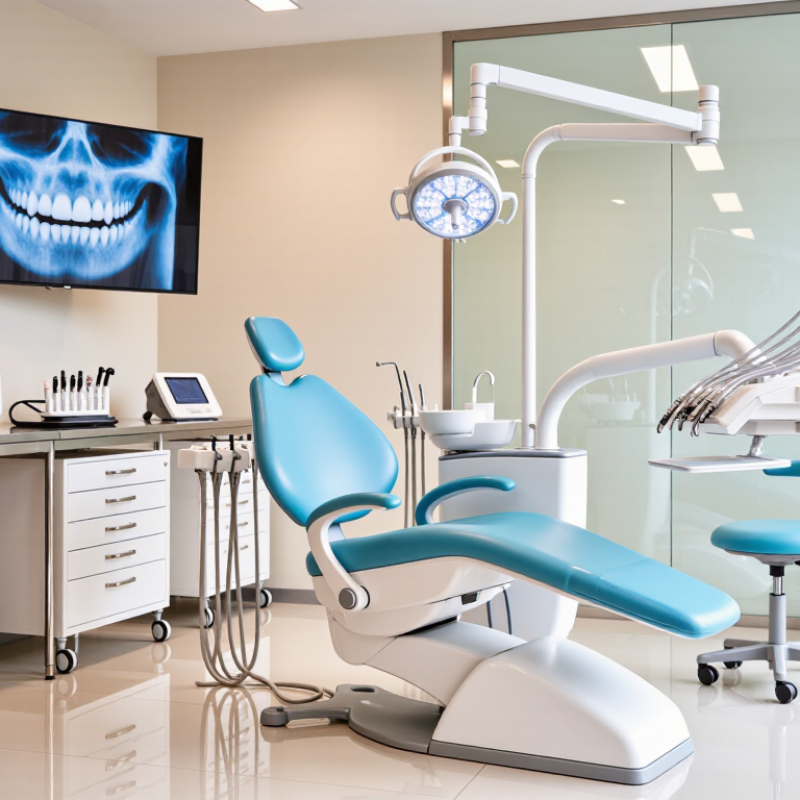
For global buyers, dental equipment sourcing starts with clinical purpose, not attractive specifications. Diagnostic equipment includes intraoral cameras, digital radiography systems, and caries detection devices. These tools support visual assessment, image capture, and treatment planning. A panoramic unit provides a broad view of teeth and jaws. Cone-beam imaging adds three-dimensional detail for implant planning and complex surgery. Buyers must consider radiation protection, image quality, and local compliance.
Treatment equipment covers dental chairs, delivery systems, handpieces, curing lights, and ultrasonic scalers. Chairs support patient positioning and ergonomic access during routine procedures. High-speed handpieces remove tooth structure efficiently, while low-speed units support polishing and finishing. Curing lights activate restorative materials with controlled light output. Small differences matter. Buyers should check output stability, noise levels, waterline design, and replacement-part availability. In daily practice, easy cleaning may matter more than a long feature list.
Sterilization equipment forms another essential category. Autoclaves process reusable instruments under controlled heat and pressure. Ultrasonic cleaners help loosen debris before sterilization. Sealing machines protect packaged instruments during storage. These devices must fit the clinic’s workflow, electrical supply, and validated procedures. Field experience shows that teams often underestimate training, maintenance, and downtime. That approach deserves reconsideration. Product documentation, service response, calibration records, and user feedback offer stronger evidence than marketing claims. A practical comparison should include workload, operator skill, installation conditions, and total cost over several years.
| Equipment Category | Typical Configuration | Core Clinical Applications | Key Sourcing Specifications | Quality, Safety and Validation Considerations |
|---|---|---|---|---|
| Dental Treatment Unit and Chair | Motorized patient chair, delivery system, operating light, cuspidor, instrument tray and assistant module. |
|
| Check electrical safety, emergency stop functions, waterline hygiene, patient positioning stability and applicable dental-unit requirements such as ISO 7494-1 and ISO 6875. |
| Intraoral X-ray System | Wall-mounted or mobile generator with a digital sensor or phosphor-plate imaging system. |
|
| Verify radiation protection, electrical safety, calibration procedures, image-quality testing and compliance with local diagnostic-radiology regulations. |
| Panoramic and Cephalometric X-ray System | Extraoral digital imaging unit with panoramic, cephalometric and, in some configurations, 3D imaging functions. |
|
| Require acceptance testing, radiation shielding assessment, image-quality checks and operator training. Applicable extraoral X-ray standards and national rules should be confirmed before purchase. |
| Cone Beam Computed Tomography (CBCT) | Cone-beam 3D imaging system with selectable field-of-view sizes and dedicated dental reconstruction software. |
|
| Dose optimization, acceptance testing, periodic quality assurance, radiation shielding and trained-user requirements are essential. Use only when 3D imaging is clinically justified. |
| Intraoral Scanner | Handheld optical scanner with scanning software, touchscreen or computer workstation and digital case-export capability. |
|
| Evaluate accuracy on full-arch and short-span scans, software update policy, cybersecurity, data ownership, infection-control instructions and compatibility with the clinic’s laboratory workflow. |
| Autoclave Sterilizer | Steam sterilizer with chamber, vacuum or gravity-displacement cycle, drying function and cycle-recording system. |
|
| Confirm applicable sterilizer requirements, load monitoring, chemical and biological indicators, preventive maintenance and validation according to recognized steam-sterilization practices such as ISO 17665. |
| Dental Air Compressor | Oil-free compressor with receiver tank, dryer, filtration stages and automatic pressure control. |
|
| Check oil-free design, moisture control, bacterial filtration, pressure relief, electrical protection and the required air quality for the intended clinical equipment. |
| Central or Chairside Suction System | Wet or dry suction pump with separator, amalgam separator where required, hoses and collection system. |
|
| Review infection-control design, backflow prevention, waste disposal, separator requirements and compatibility with the clinic’s plumbing and electrical infrastructure. |
| High-Speed and Low-Speed Handpieces | Air-turbine high-speed handpiece, electric or air low-speed motor, contra-angle and straight attachments. |
|
| Confirm sterilization instructions, runout, cooling-water delivery, bur retention, vibration, noise and compliance with applicable dental handpiece requirements such as ISO 14457. |
| Light-Curing Unit | LED curing device with cordless handpiece, light guide, radiometer or output-monitoring function. |
|
| Measure output periodically, inspect the light guide for damage and confirm that the spectral range and curing intensity match the materials used in the clinic. |
| Ultrasonic Scaler and Prophylaxis System | Piezoelectric or magnetostrictive scaler with interchangeable tips, water irrigation and optional polishing unit. |
|
| Verify tip wear limits, waterline hygiene, heat generation, electrical safety and correct power settings for periodontal, restorative and endodontic applications. |
| Endodontic Motor and Apex Locator | Electronic motor with contra-angle, torque and speed control, often integrated with an electronic apex locator. |
|
| Confirm calibration, file compatibility, sterilization limits, electrical isolation and performance with different canal conditions. Operators should follow the file manufacturer’s recommended settings. |
| Implant Motor and Surgical Physiodispenser | Brushless motor, contra-angle, foot control, peristaltic irrigation pump and programmable surgical settings. |
|
| Check torque verification, sterile irrigation pathways, overheating control, emergency functions, calibration records and compatibility with surgical instruments. |
| Dental Operating Light | Ceiling-, wall- or unit-mounted LED light with adjustable intensity, color temperature and sensor or handle control. |
|
| Evaluate glare, heat, shadow control, mechanical stability, cleaning compatibility and electrical safety. Light intensity should be suitable for both routine and surgical procedures. |
| Dental Laboratory CAD/CAM Equipment | Digital scanner, design software, milling machine or 3D printer, sintering or post-processing equipment where required. |
|
| Verify material-specific validation, dimensional accuracy, resin or ceramic handling, ventilation, dust extraction, software licensing and traceability of production records. |
| Dental Waste and Amalgam Separation Equipment | Amalgam separator, solids collector, sharps container and regulated clinical-waste handling accessories. |
|
| Confirm local environmental requirements, documented waste transfer procedures, leak prevention, maintenance records and safe handling of contaminated or sharp waste. |